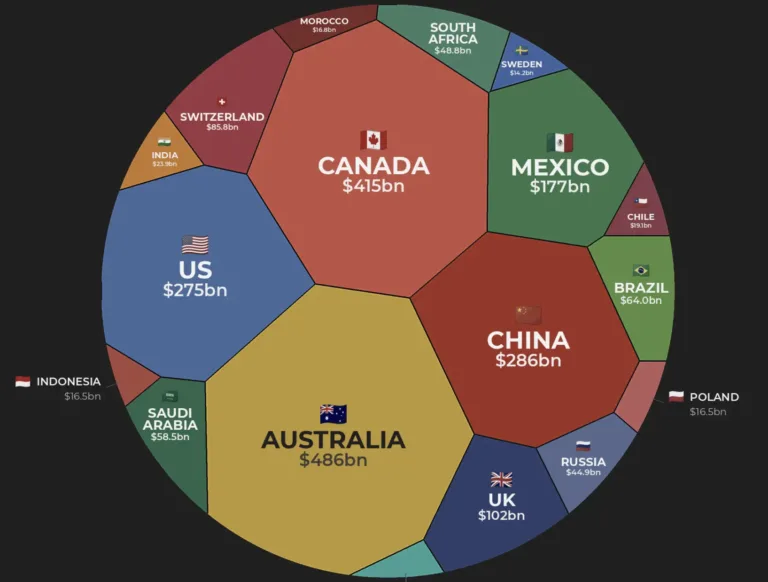
The July reshuffling of the MINING.COM TOP 50 index showed just how volatile the year remains for the global mining industry. The combined market capitalization of the world’s largest miners is hovering around $2.17 trillion, but beneath this calm surface, major shifts are underway. China’s Zijin Mining increased its value by nearly a quarter in a month, while Russia’s Polyus plunged almost 40% after an unexpected decision to freeze shareholder payouts.
July added $18 billion to the ranking, while the index is up a symbolic $26 billion since the start of the year. But the seemingly stable headline figure is misleading. The gap between the best and worst monthly performances among individual companies reaches $545 billion. If the index were calculated using each company’s peak valuation, it would have reached $2.44 trillion. At their lowest valuations, the combined figure would have fallen to $1.9 trillion. This is the true amplitude of the commodities market in 2026.
The biggest winner in July was Zijin Mining. The company added $24 billion in market capitalization, overtaking Newmont in one leap to take fourth place with a valuation of $125 billion. The catalyst was its preliminary first-half report: net profit jumped 68%, while gold production rose to 1.5 million ounces. But lithium delivered the biggest surprise. Production of lithium carbonate equivalent surged from 7,000 to 43,000 tonnes — a sixfold increase that coincided perfectly with the recovery in the battery materials market. Zijin calls lithium its third engine of growth, and for the first time, the figures back up that claim.
The opposite happened at Polyus. The Russian gold miner announced a freeze on dividends until 2030 to finance its investment program. The market responded with a sell-off: the stock fell 26% in a single session, its second-worst day in history after the 2008 Lehman Brothers collapse. Over the month, the company’s market capitalization dropped by $13.2 billion, pushing Polyus down to 28th place. Moscow-based analysts have speculated that the company may be preparing for a potential windfall tax on gold miners and budgeting for a gold price of $3,100 per ounce — significantly below current market levels.
Chinese gold stocks, meanwhile, bounced off their lows. Zhongjin Gold gained 21%, Shandong Gold rose nearly 17%, while Chifeng Jilong, which remained outside the ranking, surged by more than half. This appears to be a correction following a prolonged decline: Shandong Gold had lost more than 60% from its peak before investors began to view the sector as attractive at around ten times annual earnings.
Western precious metals miners moved in the opposite direction. Fresnillo lost 10%, Coeur nearly 13%, and Agnico Eagle 5%. Newmont surrendered fourth place to Zijin. However, after the July snapshot was closed, gold surged to a seven-week high above $4,400 amid a decline in US employment.
There was plenty of action at the bottom of the ranking as well. Western Mining jumped 41.5% to close out the top 50. Morocco’s Managem debuted in 39th place, gaining 106% since the start of the year on the strength of its African gold and cobalt assets. South32 returned after selling its aluminum business to Alcoa and receiving the final federal approval for the Hermosa zinc-silver-manganese project in Arizona. Indonesia’s Amman Mineral, which had lost three-quarters of its value from its peak, rebounded 25%.
Australia remains at the top of the ranking. BHP has added $62 billion since the start of the year, reaching $216 billion. Its lead over second-placed Rio Tinto has reached $50 billion — the largest gap between first and second place in the history of the index. Melbourne’s three-headquarters mining cluster is worth $395 billion, almost one-fifth of the entire ranking.
Glencore reported a spectacular first half: EBITDA jumped 86%, copper volumes and prices increased, and its trading division benefited from oil market volatility. The company confirmed its Sydney listing for October and announced a new share buyback. A moratorium on talks with Rio Tinto following its rejection of the $260 billion mega-deal in February has expired, but Melbourne is in no hurry to return to the negotiating table.
The July ranking captured a new reality: copper and lithium are moving to center stage, gold markets remain volatile, and tectonic shifts such as the Anglo American–Teck merger are poised to reshape the top of the table. A single month is now packed with more developments than some entire decades.
Source: MINING.COM
Image: MINING.COM