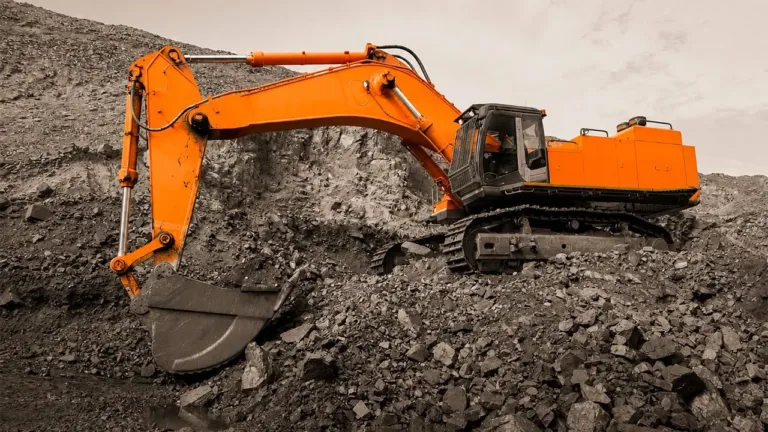
The Murmansk Region has begun closing and reclaiming an iron ore mine that supplied the local economy for more than two decades. The Bauman deposit, commissioned during the Soviet era, was eventually deemed uneconomic, and the site is now being restored to its natural state. Heavy machinery has already begun reshaping waste rock dumps.
The Bauman Professor’s Deposit was commissioned in 1987. The open-pit mine operated for more than 20 years before production was halted in 2008. Its final fate was determined by Russia’s State Reserves Commission, which in April 2024 approved a feasibility study concluding that extracting the remaining reserves was uneconomic using either open-pit or underground mining methods.
The technical closure phase has now begun. Specialists are leveling waste rock dumps to prepare the site for biological reclamation, the final stage of restoration when the disturbed land will be seeded with vegetation and returned to the natural ecosystem. The entire process is scheduled to be completed by October 2026.
The reclamation program includes a range of measures to prevent soil erosion, stabilize the terrain, and create conditions for the natural recovery of local ecosystems. In practical terms, the former mine is being transformed from an industrial site into part of the surrounding landscape.
This is not the company’s only environmental initiative. Previously, Olcon expanded its biological wastewater treatment system at the Kirovogorsky open-pit mine, continuing its efforts to reduce the environmental impact of mining operations on the Kola Peninsula.
The closure of the Bauman mine is more than a technical procedure. It represents a planned return of industrial land to nature and demonstrates that the end of a mining project can be managed with environmental restoration in mind.
Source: @dprom
Image: @dprom