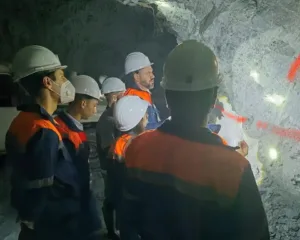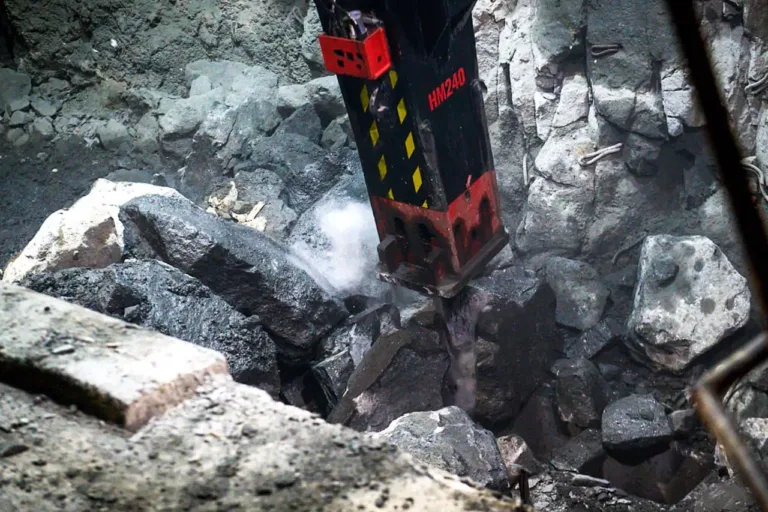
Trials of an automated system for breaking oversized rock have begun at the Komsomolsky mine. The device — known as a hydraulic rock breaker, or “butoboy” — was previously operated by a person from an enclosed cab. It has now been equipped with machine vision systems and automatic control algorithms. The development is a joint effort by Nornickel and Russian IT company Reksoft.
The robotic rock breaker independently detects pieces of ore that have not passed through the crusher and selects the optimal impact point for the hydraulic hammer. Cameras and sensors help the system navigate the working face, while engineers are already installing equipment and configuring software using a digitized 3D model of the mine workings.
The new technology addresses several pressing challenges at once. The first and most important is safety: personnel are removed from hazardous areas where rockfalls or flying debris may occur. The second is a shortage of qualified workers: a single operator at a remote control station will be able to monitor multiple rock breakers simultaneously rather than manning each machine individually. The third advantage is efficiency: the robotic system requires no lunch breaks or shift changes and is capable of continuous operation. Preliminary estimates put the productivity gain at no less than 10%.
As Anton Maksimov, Chief Manager of the Innovation Department at Nornickel’s Polar Division, explained, the system responds faster than a human operator. The algorithms independently select target objects, identify the most effective point for the hydraulic hammer, and calculate the shortest path for the boom — all without interruption for shift changes or technical breaks.
The trials at Komsomolsky are only the first stage. If the technology proves reliable, robotic rock breakers of this type may be deployed at other mines across the company — a significant step toward fully unmanned mining operations in the conditions of the Far North.
Source: Nornickel
Image: @nornickel_official