Russian and Chinese scientists have developed an innovative technology for processing ash from coal thermal power plants. The method allows the extraction of valuable alumina for production aluminum, reduce waste and reduce dependence on imported raw materials.
The world’s coal-fired power plants produce about a billion tons of ash every year. Most of this waste is stored, polluting the environment. Moreover, the ash contains up to 40% aluminum oxide, a key component for metal production. Russia and China, as the largest aluminum producers, are experiencing a shortage of their own bauxite and are forced to import raw materials. New technology solves this problem by using ash as an alternative source of aluminum.
The recycling process includes three main stages. First, the ash undergoes magnetic separation, which removes up to 34% of iron. Then acid leaching is carried out at high temperature, which allows you to extract up to 78% of the aluminum in just one and a half hours. At the final stage, the solution is cleared of iron using ion exchange resins. The cleaning efficiency reaches a 12-fold reduction in iron concentration.
The technology is not only environmentally friendly, but also economically beneficial. The profit from each ton of processed ash can reach 11.5 thousand rubles. The process produces three useful products: alumina for metallurgy, an iron-containing fraction and silica residue for building materials. The method has successfully passed laboratory tests and is ready for implementation on an industrial scale.
The material was prepared with the support of the Russian Ministry of Education and Science as part of the Decade of Science and Technology.
Source: minobrnauki.gov.ru
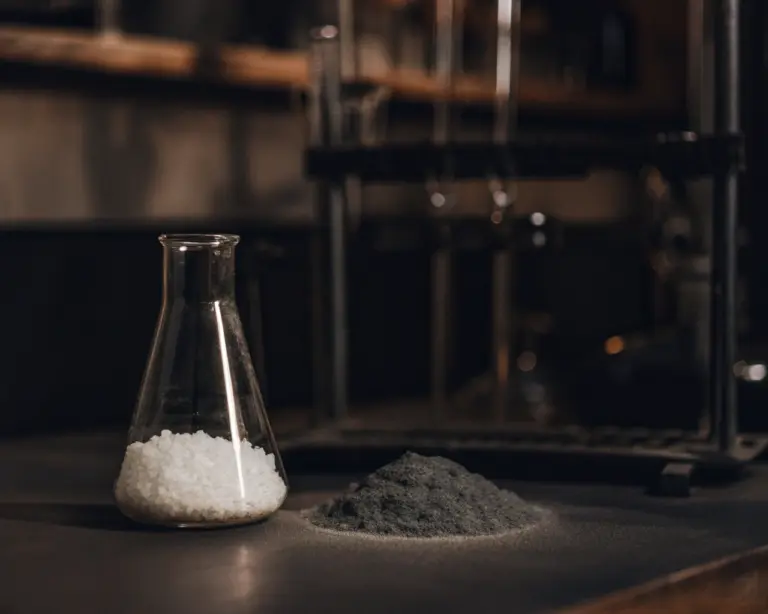
The image was generated by a neural network.