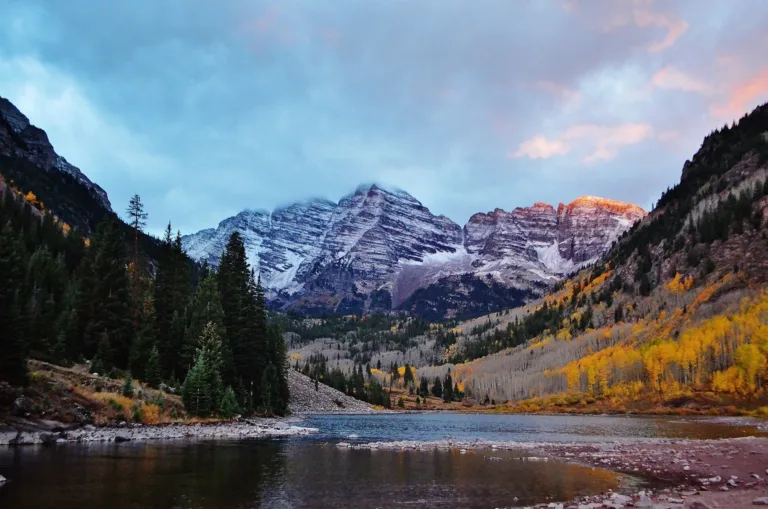
Формирование каньона реки Грин-Ривер через Уинтаские горы в результате литосферного проседания

Scientists have solved the mystery of the rising bed of the Green River in the USA

05.02.2026
Reading time: 2 min
0

Geologists may have found an explanation for an age-old mystery: how the Green River managed to carve a deep canyon through the Uinta Mountains in the United States rather than bypass them. The answer lies in the slow subsidence of the earth’s crust beneath mountain range.

For 150 years, scientists have puzzled over the unusual route of the Green River, the Colorado’s largest tributary. Instead of bypassing the 4 km high Uinta Mountains, the river cut a canyon 700 meters deep into them. The mystery was compounded by the fact that the mountains are 6 times older than the river bed.

An international team of researchers from the UK and US has proposed a new explanation. In their opinion, the cause was a phenomenon called a “lithospheric drop”. It occurs when dense, heavy material at the base of the Earth’s crust beneath a mountain range begins to sink into the mantle, dragging the surface with it. This temporarily lowers a section of the mountains, allowing the river to make its way. When the “drop” finally breaks away and sinks, the earth returns, but the channel has already been formed.

Scientists used seismic image and computer modeling. The data showed a cold circular anomaly under the mountain range at a depth of about 200 km – this is probably the detached “drop”. Modeling of the river network also revealed a characteristic circular zone of uplift around the mountains—a “fingerprint” of this process.

This discovery not only solves a long-standing geological puzzle, but also confirms that “lithospheric blobs” may be the key to understanding landform formation in tectonically quiet regions. The confluence of the Green and Colorado Rivers millions of years ago altered the North American continental divide, influencing the evolution of the region’s entire ecosystem.

Source: Phys.org

Image: Pixabay

Prepared by —
Author avatar
Yulia Frolova
TAGS
Did you like this news? Share with friends
RELATED

Leave your comment


Editor-in-Chief
Maria Kostina
Maria Kostina
Geophysicist, founder of the project and editor-in-chief GeoConversation. Salt of the Earth
GO TO THE EDITOR'S COLUMN

GeoConversation. Salt of the Earth is a media platform where top mining-industry specialists share their experience, helping professionals communicate and collaborate more effectively.

Learn more about the project
TOP PROFESSIONALS
Олег Набелкин — эксперт по рентгеноспектральному анализу minералов и руд

Oleg Nabelkin

IMGRE, Moscow
Head of Department
Исхак Фархутдинов

Iskhak Farhutdinov

V.I. Vernadsky State Geological Museum of the Russian Academy of Sciences
Academic Secretary
Алексей Дубинин — эксперт по WordPress с 10-летним опытом. Создает продающие сайты с высокой конверсией и интеграцией CRM

Alexey Dubinin

Turnkey Websites
Website Developer
VIEW ALL EXPERTS
CATEGORIES
SUBSCRIBE
If you would like to receive a monthly selection of fresh articles by email
LIKE THE PROJECT? SUPPORT US
Friends, developing the project takes a lot of effort and financial resources. If you like what we do, you can support us in two ways.
MORAL SUPPORT
Show our website to your friends. Just click on the social media icons below and share our website on your pages.
FINANCIAL SUPPORT
Even a small fee will help us pay for the transcription (audio to text) of an expert interview or the design of drawings, diagrams, and tables.
Send a donation
Got an article idea? Suggest it.
Cool! You have an idea for us. We love that, because only the experience and knowledge of an expert makes our articles useful for the reader. Please answer 5 questions to let us know a little more about you and the article
answer questions