An international group of researchers is preparing a unique deep-sea expedition. Its goal is to confirm or refute the discovery of a new source of oxygen that rocks on the seafloor can produce.
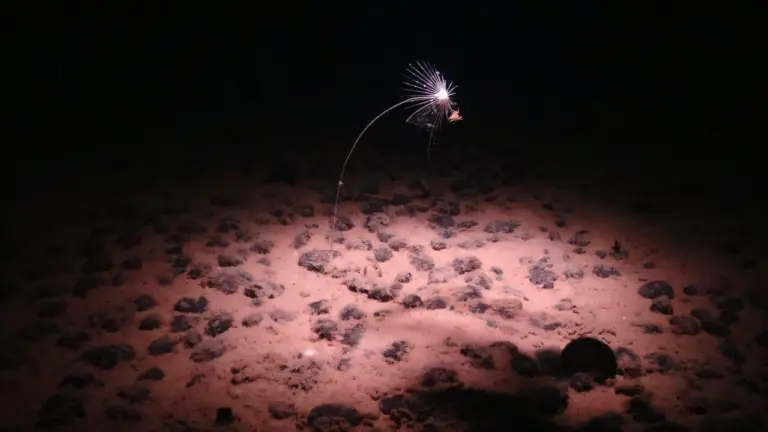
In the coming months, an unusual scientific mission will begin in the deep waters of the Pacific Ocean. Experts led by British ecologist Andrew Sweetman plan to test their hypothesis about the existence of so-called “dark oxygen.” According to their earlier research, this gas can be released polymetallic nodules – natural formations similar to potatoes and rich in valuable metals.
To test this controversial theory, scientists have created two new deep-sea vehicles. They are capable of diving to depths of up to 11 kilometers and withstanding enormous pressure. The equipment was equipped with special sensors to measure gas exchange at the bottom. The devices will be launched from a research vessel in the Clarion-Clipperton Zone, a vast area between Hawaii and Mexico.
Scientists theorize that the nodules may create a weak electrical charge, enough to split water molecules into hydrogen and oxygen in a process similar to electrolysis. If confirmed, the discovery could change ideas about xchemical processes in the depths of the ocean and the conditions in which life could arise.
However, this discovery is controversial in the scientific community. Some experts, such as biogeochemist Matthias Haeckel from Germany, did not observe such an effect in their studies. Critics speculate that the oxygen detected could simply be air bubbles left behind in the measuring instruments. Sweetman’s team rejects this theory, citing years of experience with the equipment.
The research also has important practical significance, since the Clarion-Clipperton zone is a promising area for the future deep sea mining. The nodules contain cobalt, nickel and other metals needed for electric vehicle batteries. Scientists emphasize that their goal is not to stop production, but to study the possible impact on the fragile deep-sea ecosystem in order to minimize damage.
The expedition, funded by the Japanese Nippon Foundation, starts in May. The first results will appear within a day or two after the devices are lifted, but final conclusions will require additional months of laboratory analysis.
The upcoming expedition may answer a fundamental scientific question about unknown sources of oxygen on Earth. Its results will also influence the debate about the rules for the future development of mineral resources in the deep ocean.
Source: Phys.org
Image: Phys.org