Siberian researchers have proposed a new way to monitor permafrost thawing, which allows obtaining data much faster than conventional methods. The development is designed to improve the safety of facilities built on unstable soils and help specialists quickly respond to climate change.
Today, monitoring of the state of permafrost in the country is mainly carried out through drilling deep wells and installing temperature sensors. This method is widely used in government programs, but it has a weak point: information arrives with a delay, since heat reaches the sensors slowly. Because of this specialists they may not always notice dangerous processes in time.
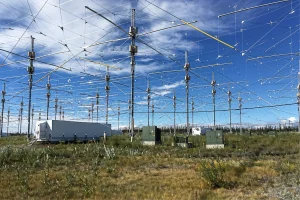
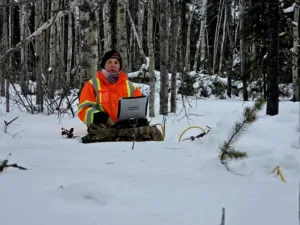
Team of the Institute of Oil and Gas Geology and geophysics SB RAS has developed an alternative. It is proposed to drill pairs of shallow wells and place transmitters and receivers in them that “scan” the space between the points. Sensors detect changes in the electrical resistance of frozen soils – the indicator changes when the ice begins to melt. In this way, specialists can receive data in almost real time and more accurately identify risk areas.
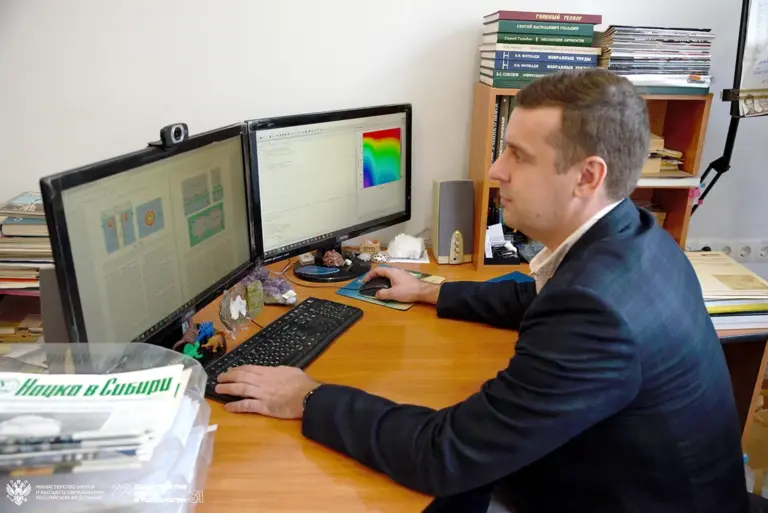
The method allows you to record even small changes in the structure of underground rocks. The obtained information is displayed in the form of graphs and maps, which simplifies the assessment of the condition of sites where buildings, roads and other objects are located. If the system detects rapid heating of the ground, this makes it possible to take measures in advance – from limiting operation to urgent evacuation.
Scientists propose transmitting monitoring results to relevant departments remotely via mobile networks or satellite channels. This expands the ability to control remote areas and facilitates the work of specialists.
The developers note that the idea of cross-well “canning” arose in the oil industry, where the method was used to assess the movement of fluids in formations. Now the technology has been adapted to Arctic conditions and is undergoing practical testing. If they confirm the effectiveness of the new method, permafrost monitoring will become faster and more reliable, which will help protect infrastructure in permafrost regions.
The material was prepared with the support of the Russian Ministry of Education and Science as part of the Decade of Science and Technology.
Source: sbras.info, goarctic.ru
Photo: Irina Baranova