The global industry is faced with a new challenge – the growing shortage of water resources. Companies reporting to the CDP platform estimate potential losses from water outages at more than $531 billion. Africa and South America are the most vulnerable, where climate change and outdated infrastructure endanger stability of production.
The head of Insight Terra, Alastair Bovim, points to a systemic problem – the quality of the data collected. Many enterprises continue to use manual measurements and periodic reporting. The expert compares this approach with surgical intervention based on the results of tests a month ago. By the time the report was drawn up, the real picture at the site no longer corresponds to the recorded indicators. Continuous monitoring allows you to quickly detect equipment failures, communication problems or incorrect settings.
The experience of implementing surveillance systems shows that the main risks lie not in complex technical solutions, but in elementary operational shortcomings. It often turns out that seemingly serviceable equipment does not transmit information for weeks due to the banal expiration of the SIM card or an unpaid communication bill. Fixing these issues requires minimal effort, but without digital controls, these blind spots mask growing threats.
The mining industry is particularly sensitive to water issues—liquid is involved in everything from ore processing to dust suppression. The Chilean El Soldado mine, owned by Anglo American, has already implemented technologies for treating and reusing water from tailings ponds. Returning process water to the production cycle reduces pressure on natural sources, which directly affects the maintenance of licenses and relationships with local communities.
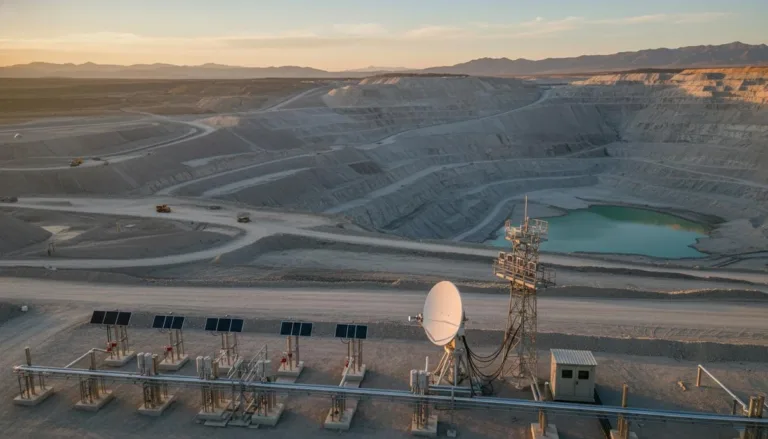
In South Africa, the situation is complicated by rainfall. Water levels in quarries can reach critical levels in a matter of hours, requiring immediate response. Satellite monitoring and analytical platforms based on artificial intelligence are capable of processing huge flows of information in real time, but the effectiveness of the algorithms directly depends on the reliability of the incoming data. Failures in the transmission infrastructure lead to distorted results. Automation here serves only as a tool, providing the engineer with relevant information for decision-making.
Business sustainability in conditions of limited resources is determined not only by technical equipment. Under the pressure of production challenges, companies often become accustomed to warning signs and begin to accept deviations as normal. In a critical situation, such inertia can paralyze control. True reliability occurs where modern digital infrastructure is supported by personal responsibility of staff and a willingness to instantly respond to system warnings.
Source: gorgorizont.ru
Image: gorgorizont.ru