You open the list of specialties on the website of a mining university and come across “mine surveying.” It sounds solid, but what it is is unclear. Meanwhile, every mine and every quarry in Russia works only because there is a surveyor there. Without it, not a single miner will go underground. We looked into professional standard and industry sources to figure out what a surveyor does, how much he earns, and how to become one.
Surveyor – what kind of profession is it?
A surveyor is a mining engineer who accurately measures the space underground and on the surface, and then transfers it all onto maps and plans. Simply put, he is an underground navigator: he makes sure that production We went exactly according to the project, and not where we had to.
What does a surveyor do?
We will explain through situations that can happen without his control. Here main tasks of a surveyor:
- Filming of quarries and mines – record where exactly the workings are located. Without this data, it is impossible to understand whether the mining is proceeding correctly and whether the crew is moving away from the ore body.
- Measurements of production volumes — calculate how much ore or coal was actually extracted in order to send this figure to official reporting, on the basis of which extraction taxes are calculated.
- Setting direction of workings – transfer the project from the drawing underground. An error of one meter at the beginning of the tunnel turns into tens of meters of deviation at depth.
- Rock movement control — monitor whether the roof of the mine is deformed. If the data is alarming, you need to convey the information to management.
Read more about other professions in the industry:
— How to become a geomechanic and where to grow in the profession
— Profession geologist: what he does, the essence of the work, career
— Women in oil and gas: there are no male and female professions
How does a surveyor differ from a surveyor?
Related professions: both are about precise measurements of space. The difference is where the specialist works. The surveyor is on the surface, and the surveyor takes measurements underground – into mines and workings. It performs a separate engineering task with its own instruments and standards.
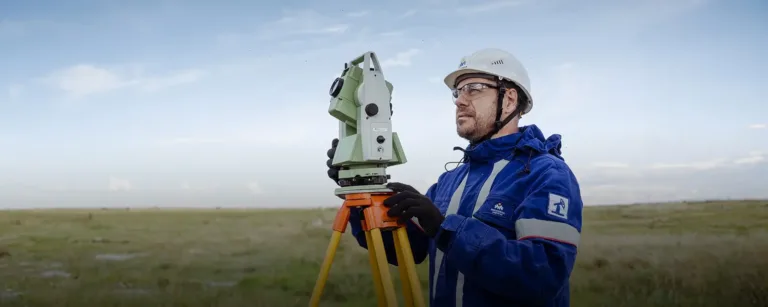
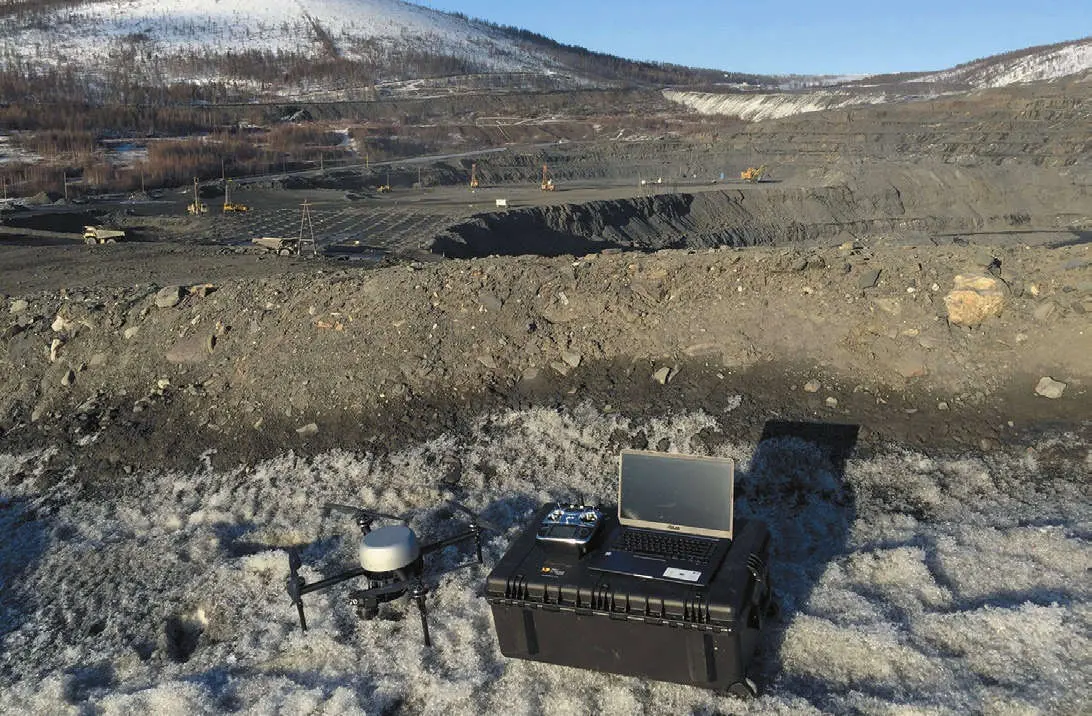
A specialist has no longer had a tape measure or a theodolite in his hands. A modern mining surveyor uses laser instruments, GNSS satellite equipment, drones and specialized software.
“It is difficult to imagine surveying in the future without unmanned technologies, and the fact that drones today significantly facilitate the work of surveyors and make it safer is an indisputable fact,” – speaks Vladimir Zimich, President of the Union of Surveyors of Russia.
Surveyor’s salary
The main practical question is how much a surveyor earns. According to job aggregator GorodRabot.ru, the average salary of a surveyor in Russia in April 2026 is approx. 127,775 rubles, but the fork is wide.
On shift and in remote regions, the numbers look completely different: district surveyor in geological exploration in Krasnoyarsk receives from 250,000 rubles, in gold mining – up to 262,000 rubles.
More examples for comparison. A local geologist on shift with 1–3 years of experience earns 200,000–380,000 rubles, surveyor – from 310,000 rubles. Simply put, the specialty of a surveyor today is stable demand and high pay.
Where to study to become a surveyor
Training to become a surveyor can be completed in two ways:
- College or technical school (SPO) in the direction of “Mine Surveying” leads to working and technical positions. Graduates enter production faster.
- University — specialty in “Mining”, profile “Mine surveying”. Next comes the position of mining engineer-surveyor.
There are specialized education programs in NUST MISIS And RUDN University. Their graduates go to mining and oil and gas companies, as well as government agencies, including Rostechnadzor. A career, as a rule, begins with the position of a local surveyor and continues in the role of a leading specialist and chief surveyor of a field.
We wrote about how to get an education in order to get a good salary in the mining industry in the article “Where to study to become a geologist: how to choose a university and not make a mistake»
Is it worth becoming a surveyor: what do they say?
Nikolay Mogilenskikh, chief surveyor of Russia’s northernmost mainland oil field, admits, that he got into the profession by accident: “I remember we also laughed with my comrades at the wonderful name of the specialty.” He laughed and did it anyway, if only out of curiosity. And then I couldn’t leave.
“Enterprises and design institutes now interact more actively with universities and begin to hire students while they are still studying,” says Mogilenskikh, who now teaches at the Tyumen Industrial University and observes this from the inside.
The demand for surveyors is growing, but it’s not just about money. Those who remain say that the profession constantly throws up something new.
“It seems that quite recently we have mastered satellite navigation, and now more and more scanning devices and software systems are used in our professional activities,” says Mogilenskikh.

Behind all these devices and software systems there are decisions on which the fate of a person depends.
“The specialty requires making quick decisions, since the lives of all specialists working at this facility depend on it. There is a huge risk… But the interest and love for the business is stronger,” tells surveyor Ali Nurlanov.
Are you working as a surveyor? Tell us in the comments how you got into the profession.
Cover photo: Energy+