Types of coal are not marketing categories, but fifteen real brands with fundamentally different compositions. Some burn with a bright flame and are well suited for barbecues, others barely ignite, but give maximum heat and a minimum of impurities, while others, when heated, sinter into coke, without which not a ton of cast iron can be smelted.
The properties of each grade are determined by the temperature, pressure and time at which the coal was formed. We are figuring out how not to overpay for coking where there is enough energy – and vice versa.
Hard coal – what type of resource and how it was formed
Coal from a geological point of view – a solid fuel mineral of organic origin and a non-renewable resource. By carbon content (75–92%) and calorific value, it occupies an intermediate position between brown coal and anthracite.
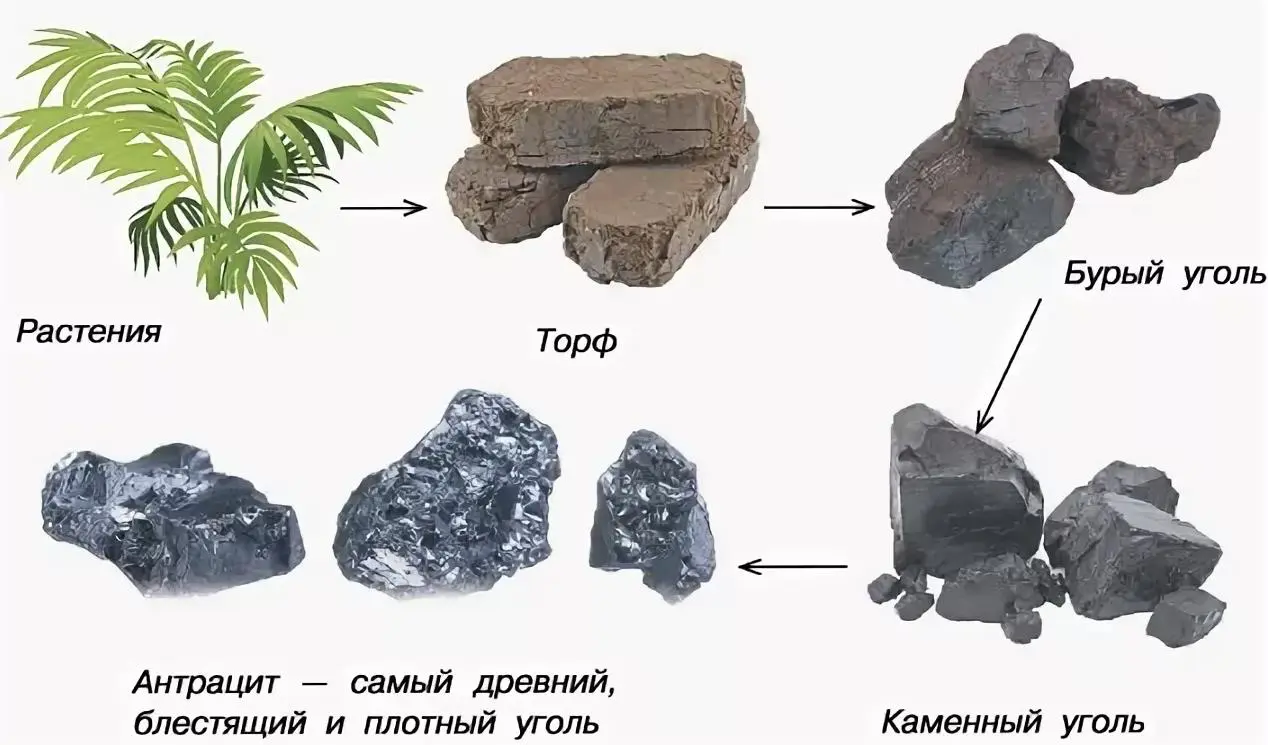
The origin of coal dates back to the Carboniferous and Permian – approximately 300-350 million years ago. Then, on the site of the current coal mines were swamps with tree ferns, horsetails and the first gymnosperms. Dying, all this vegetation accumulated in layers, was covered with sedimentary rocks and gradually – under pressure and at high temperatures – went through a chain of transformations: peat → brown coal → hard coal → anthracite. The deeper the layer went, the higher the degree of carbonization, the more carbon and the less volatile substances in the final rock.
Main types of coal and their classification
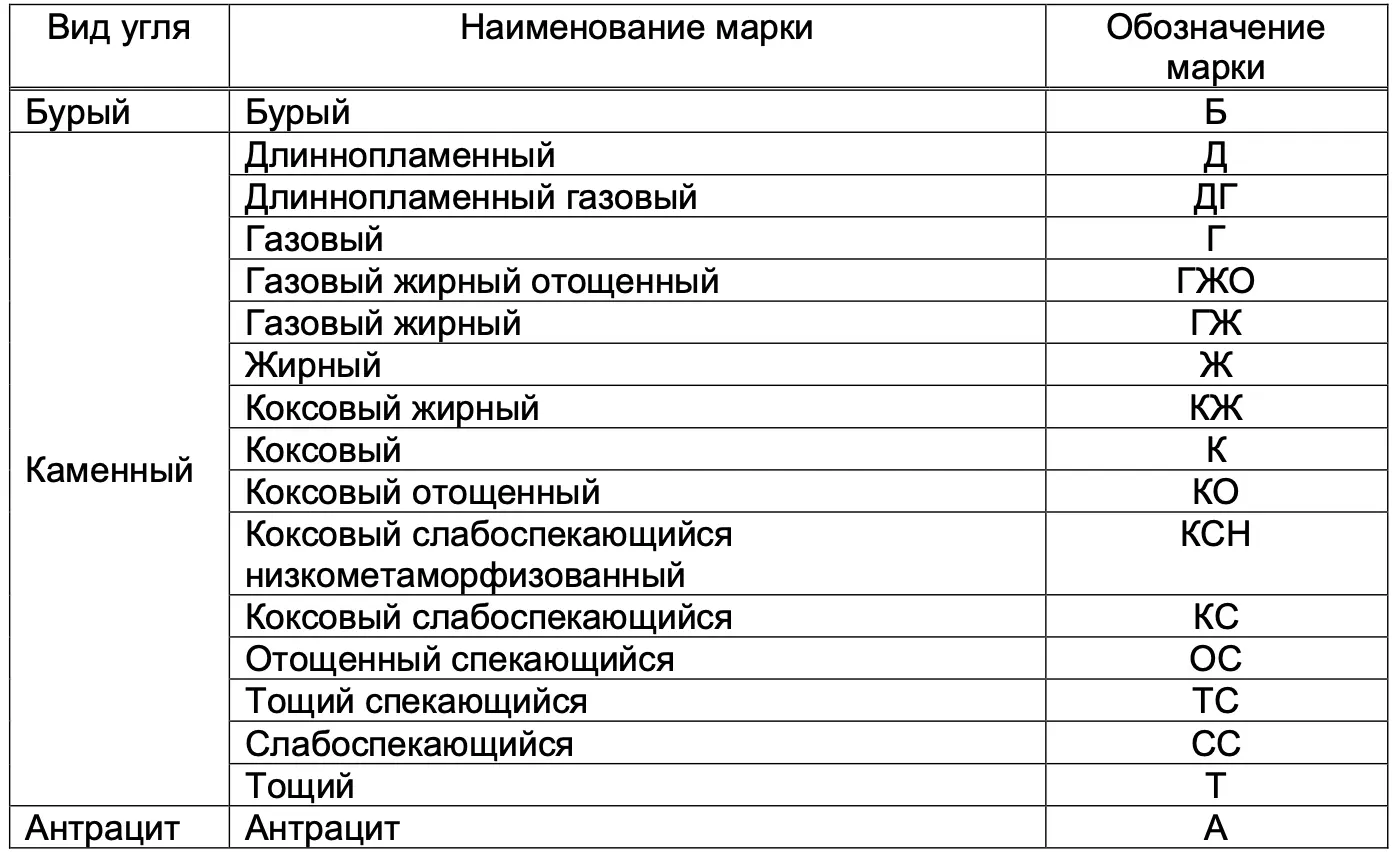
By GOST 25543-2013 All fossil coals are divided into three types: brown, hard and anthracite. Each type of mined coal is a range of grades with different characteristics. The brand is determined by four parameters:
- Heat of combustion – how much heat a kilogram produces when burned. The higher it is, the less coal is needed per ton of steam or smelting.
- Ash content is the proportion of non-combustible impurities that become slag after combustion. The lower the indicator, the cleaner the coal.
- The release of volatile substances – the higher, the easier it ignites and the longer the flame, but the more smoke.
- Caking ability is the ability to form coke when heated without air access: not important for energy, but fundamental for metallurgy.
All four parameters change as the coal “matures” in the depths: the deeper the seam was and the longer it was formed, the more carbon and less impurities. Long-flame coal is at the beginning of this scale, anthracite at the end. Everything in between is a compromise between ease of ignition and heat transfer.
Long-flame coal (D) is the “youngest”
Long-flame is a grade of coal with the lowest degree of carbonization, which is why it ignites easily and burns with a long, smoky flame—hence the name. It cannot sinter when heated, so it is not suitable for coke production, but it is well suited for communal boiler houses, private houses and anthracite ignition.
Coking coal (Zh, K, KZh) is the basis of metallurgy
This is the main thing raw materials for ferrous metallurgy. When heated without air access, these grades are sintered into coke, a necessary reducing agent in blast furnace production. It is the ability to produce the highest yield of metallurgical coke that makes them the most expensive among hard coals.
Anthracite closes the scale of coalification – according to GOST 25543-2013, this is a separate type of mined coal, and not a grade of hard coal. Due to the maximum carbon content (92–98%) it ignites with difficulty, but it burns smokelessly and gives off more heat than any other brand – that is why it is harnessed at large thermal power plants, used in the production of electrodes and in water purification filters.
Where are different types of coal mined in Russia?
Each brand of hard coal is tied to its own region: coking coal is Kuzbass and Yakutia, thermal coal is the Minusinsk basin, anthracite is Eastern Donbass.
Long flame and gas – the most popular energy grades – are mined mainly in the Kuzbass and Minusinsk basin. The seams here lie at a depth of several tens of meters to 300 m on average, so both open-pit mines and mines operate – these are the grades that form the main export flow of Russian coal.
Coking coal They are mined there, in Kuzbass, and in Southern Yakutia, but in a fundamentally different way: valuable grades lie at a depth of 500 to 900 meters, so open-pit mining here is either impossible or economically unprofitable – mining is carried out mainly by the mine method. Kuzbass covers about 80% of Russia’s demand for coking coal.
Anthracite They are mined in two places: in the Rostov region – Eastern Donbass – and partly in Kuzbass. Rostov seams go to a depth of over 1000 meters, so they use exclusively the underground method, which makes Donetsk anthracite one of the most expensive.
The Pechora basin in the north of the European part of Russia deserves special attention: it is unique in that it contains everything at once types of coal — 78% hard coal, 19% brown and 3% anthracite. The depth of the mines here reaches 900 meters, and mining conditions are among the most difficult in the country.
Explosives, conveyors and unmanned dump trucks – read how coal mining works from exploration to shipment: How coal is mined: methods, stages and technologies
How different types of coal are used
Based on technological application, the main types of coal are divided into three groups, each of which forms a separate market with its own price and its own consumers.
Energy brands – long-flame, gas, lean – burned at thermal power plants and in industrial boiler houses. They burn well in furnaces, produce a stable flame and do not require complex preparation – these grades form the bulk of the Russian coal market.
Metallurgical – fatty, coke, coke-fat – when heated without air access, they sinter into coke: without it, the blast furnace will not start. This is the most demanding market for coal quality and the most expensive.
Chemical grades They are used differently: not as fuel, but as raw materials. During pyrolysis and gasification, resins, naphthalene, phenol and synthetic liquid fuels are obtained from them. This area is still poorly developed, but it is this area that provides the maximum added value – and it is on this that the Energy Strategy of the Russian Federation until 2050 relies.
Who buys coal and how global demand is changing is a different story. Let’s look at who sets the tone in the coal market today: Coal mining countries: leaders and market 2026
You need to choose the brand of coal skillfully. The correct one reduces the ash content of the fuel, increases efficiency and reduces logistics costs, while the wrong one wears out equipment and eats up margins. For mining engineer and investor types of coal are not just a classification in the standard, but different markets with different prices, different consumers and different production logic.
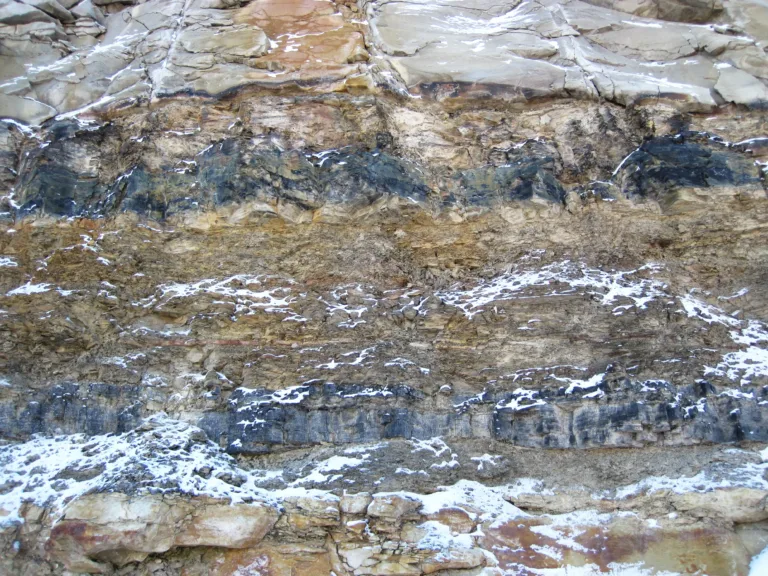
Cover photo for James St. John