Geologists from the University of Oslo have proposed a fresh explanation for the mystery of the giant sinkholes that began to appear in the Siberian permafrost. Researchers associate their formation with powerful methane emissions activated due to climate change.
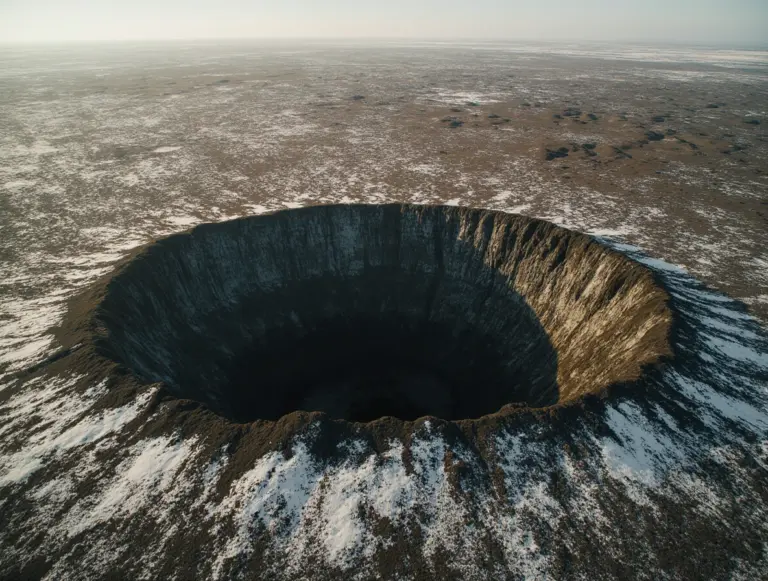
More than ten years ago, the first huge crater with a diameter of 30 meters was discovered in Yamal. Its perfectly vertical walls and depth of over 50 meters looked as if the funnel was created artificially. This phenomenon has given rise to many hypotheses – from meteorite impacts to underground explosions.
A Norwegian research team led by Helge Hellevang focused on analyzing the ice formations around the craters. Scientists have concluded that the accumulation of compressed methane in the mass plays a key role. permafrost. At the same time, they note that internal processes in permafrost alone are not enough to explain the phenomenon. If this were so, similar craters would appear throughout the Arctic, but this does not happen.
An alternative model suggests that the formation of craters is associated with a combination of two factors: the presence of large gas deposits under Yamal and Gydan and the progressive thawing of permafrost. Gas rises through cracks in the rocks, and climate change weakens the permafrost layer, which acts as a “lid.” When the methane pressure becomes critical, a powerful explosion occurs, forming a crater.
Scientists emphasize that field research and accurate measurements on site are necessary to definitively confirm the theory. Understanding the true causes of these craters is important for predicting similar events in the future and assessing the risks for the Arctic regions.
The material was prepared with the support of the Russian Ministry of Education and Science as part of the Decade of Science and Technology.
Source: geoinfo.ru
Image generated by a neural network