Kazakhstan has accumulated about 55 billion tonnes of technogenic mineral formations: waste from mining, processing, and energy production. Only a small share of this volume is being processed, although the dumps contain non-ferrous, precious, and rare metals. Experts are discussing how to turn them into a working business and remove the barriers that are still holding investors back.
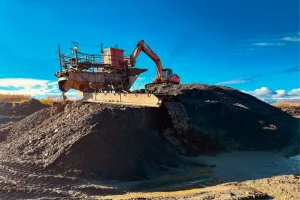
Technogenic mineral formations (TMFs) are accumulations of waste from mining, mineral processing, and energy production that contain useful components. They include overburden, processing tailings, metallurgical slag, and ash and slag waste. As of early 2024, the country had 1,747 such sites holding about 55 billion tonnes of waste. Volumes grow by hundreds of millions of tonnes every year, while only about 11% is processed.
The main advantage of TMFs is that the ore is already crushed and lies on the surface, so costly stripping is not needed. Modern technologies, including hydrometallurgy, flotation, and combined schemes, make it possible to recover valuable components. There is a successful example in Akmola region: in 2017–2018, three plants were launched there to process gold-bearing tailings from the Aksu, Bestobe, and Zholymbet mines, with a combined capacity of 7 million tonnes per year.
However, projects run up against economics. The content of useful components in waste is lower than in primary ores, and the fiscal burden remains high. To stimulate the sector, mineral extraction tax rates have already been reduced for components recovered from TMFs, and restrictions on extraction within populated areas have been lifted subject to conditions. But experts consider these measures insufficient. The taxation of TMFs used for a company’s own needs remains unresolved, as does the legal status of certain types of waste, including ash and slag.
A separate block is the legal regime. TMFs left on a site after the subsoil use right ends become part of the subsoil and are subject to the regime for solid minerals. This creates uncertainty for investors willing to put money into processing old dumps.
Processing TMFs could give Kazakhstan new sources of metals, jobs, and a lower environmental burden. But without systemic incentives and clear rules of the game, the dumps will remain dead weight, and the country will continue to lose valuable components that could be returned to circulation.
Source: “By Weight of Gold” podcast
Image: “By Weight of Gold” podcast